
The Relationship Escalator: What It Is and How to Step Off
The relationship escalator is the default script most of us absorb about how romance should go: you meet, date, become a couple, move in, marry, perhaps have children, and stay together until one of you dies. Each step is treated as the obvious next one, and a relationship that stops climbing is often seen as failing. Stepping off the relationship escalator means choosing your own steps on purpose, whether you are monogamous, open or polyamorous.
The idea is useful even if you end up wanting every traditional step. Once you can see the escalator, you can ask which parts you actually want, rather than riding it because it is moving.
Relationship escalator meaning
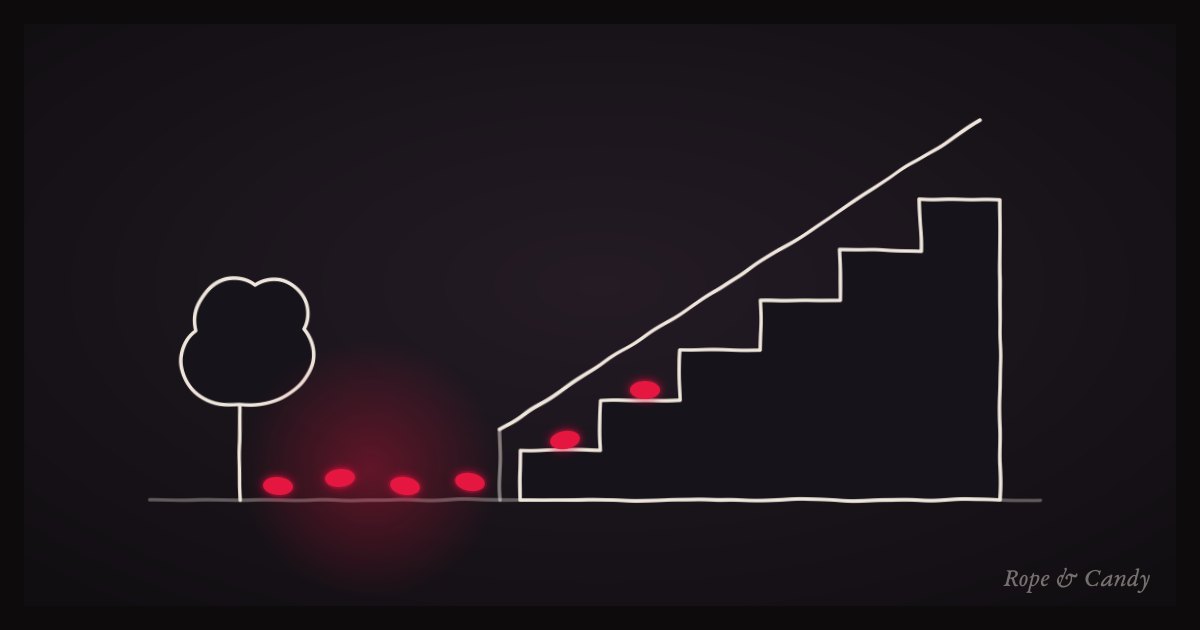
The image is a good one. An escalator moves in one direction, at a fixed pace, and getting off halfway is awkward. That is how many people experience relationships. Nobody sits you down and lists the rules, yet everyone knows them: if you have been together a year, people ask when you are moving in. If you have lived together for a few years, people ask about the wedding. After the wedding, the questions turn to children.
The term spread through polyamorous and non-monogamous circles, and solo polyamorous writer Amy Gahran did much to make it widely known. But you do not need to be non-monogamous to recognise it. Anyone who has been asked "so where is this going?" has felt the escalator moving.
Relationship escalator steps
Different writers break it down differently. Here is a plain version most people will recognise:
- Meeting and flirting. Attraction, first dates, the early rush (sometimes called new relationship energy).
- Becoming a couple. You stop seeing other people, use labels like boyfriend or girlfriend, and tell friends.
- Settling in. Regular contact, a routine, meeting each other's family.
- Commitment. Saying "I love you", talking about the future, planning holidays together.
- Merging. Moving in, sharing a home, joining finances, merging friendship groups.
- Making it official. Engagement, marriage or civil partnership.
- Building a family. Children, a bigger home, a shared life plan.
- Lasting. Staying on this top step for life is treated as success, and anything else as failure.
The unspoken rule underneath all eight: relationships only count if they keep going up. A partner you have loved for ten years but never lived with is, in the escalator's eyes, somehow less real.
What is wrong with the escalator?
Nothing, for people who want it. Plenty of happy couples ride it all the way up and would not change a thing. The problems start when it is the only option people can imagine.
- Every relationship has to become everything. A wonderful friendship with benefits, or a partner you see once a month, gets judged against a marriage and found wanting.
- Stopping looks like failure. Couples who are happy living apart keep getting asked when they will "take the next step".
- Endings look like disasters. A relationship that lasted eight good years and ended kindly is called a failed relationship.
- People skip the conversation. Because the next step seems obvious, couples move in or marry without asking whether they each want to.
Stepping off the relationship escalator
Stepping off does not mean rejecting commitment. It means making each step a choice rather than an assumption. Some common ways people do it:
- Living apart together. A committed couple who keep separate homes, sometimes in different cities.
- Not merging money. Sharing some costs, keeping most finances separate.
- Choosing not to marry, or not to have children. Both are full, valid lives.
- Being in an open relationship. Keeping your primary bond while having other connections. Our guide to what ethical non-monogamy is explains the main shapes.
- Having more than one important partner. Polyamory, where several relationships can each find their own level.
- Relationships that go down a step. Former partners who become close friends, or a live-in relationship that moves back to two homes, without it being called a breakup.
Solo polyamorous people often step off most completely: they may never plan to live with a partner or put one relationship above the others. Our page on solo polyamory covers how that works day to day. Further still, relationship anarchy questions the line between friends and partners altogether.
Signs you are riding it on autopilot
You may be on the escalator because it is moving, not because you chose it, if:
- you are planning the next step mainly because of how long you have been together,
- the honest answer to "why are we moving in?" is "it seems like time" or "the lease is up",
- you feel a quiet dread about a milestone everyone else is excited about,
- you have never once talked about what each of you wants from the relationship in five years,
- the thought of a relationship that does not "go anywhere" makes you feel like a failure, even though it makes you happy.
None of these mean you should stop. They mean the conversation is overdue.
How to step off: a conversation, not a declaration
If the escalator does not fit, the most important thing is to talk about it rather than quietly stalling. A few prompts that help:
- "Which of these steps do you actually want, and which do you feel you should want?"
- "What would commitment look like if we designed it from scratch?"
- "If we never lived together, would that bother you? Why?"
- "What do we each need to feel secure?"
Take Jonas and Ayesha. Together six years, they kept getting asked when they would move in. When they finally talked about it properly, they realised neither wanted to: they both liked having their own space and loved their weekends together. They stayed in two flats, got a joint dog-sitting arrangement and a shared holiday fund, and stopped apologising for it.
Or take Clara, who had a husband and, for three years, a partner in another city she saw every few weeks. That second relationship never climbed any steps. It did not need to. Couples and single women who travel a lot often keep friends, and sometimes partners, in more than one city, and those connections can be warm and lasting without ever going near a moving van.
Common worries about stepping off
"My family will think I am not serious." Probably at first. A simple line helps: "We are very serious about each other. We just do it our own way."
"Without the steps, how do I know where we stand?" You ask. Clear agreements replace assumptions. Some people find this more reassuring than the escalator, not less.
"What if one of us wants the escalator and the other does not?" That is a real difference, not a communication glitch. Talk about it early. Sometimes there is a middle path, and sometimes there is not, and that is better found out in year one than year ten.
"Is this just fear of commitment in a nicer coat?" For some people, maybe. For many, the opposite: they commit to more specific, more honest promises than "we will follow the usual steps".
Building your own staircase
Some couples like a mix: they marry and share a home but keep the relationship open. Others keep a nesting partner and date more lightly outside. The point is not to reject every step, but to own the ones you take.
People who live off the escalator tend to say the hardest part was not the decision but the loneliness of it, until they found others doing the same. Meeting people in person who have built unusual, happy lives does more than any book. In our own circle, the first meeting with someone new is almost always a coffee or a dinner, and plenty of the couples there have rewritten at least one step.
If you would like to meet open-minded couples and single women who think about relationships this way, you can join Rope & Candy. It is free and takes one email, and when someone from our team is in your city, we meet you for a coffee or a dinner.
Questions people ask
What is the relationship escalator?
It is the set of unspoken expectations about how a relationship should progress: dating, becoming a couple, moving in, marrying, maybe children, and staying together for life. Each step is treated as the natural next one, and stopping is often seen as failure.
Who came up with the term relationship escalator?
The phrase circulated in polyamorous and non-monogamous communities, and solo polyamorous writer Amy Gahran did a great deal to make it widely known through her writing and her book on stepping off it.
Can monogamous people step off the relationship escalator?
Yes. Plenty of monogamous couples skip steps: they live apart, never marry, keep money separate or choose not to have children. Stepping off is about choosing your steps on purpose, not about how many partners you have.
Is stepping off the escalator a sign of fear of commitment?
Not necessarily. Many people who step off are deeply committed; they simply commit to different things, like honesty, regular time together or caring for each other in old age, rather than to a standard sequence of milestones.