
What Is a Polycule? Meaning, Shapes and How One Works
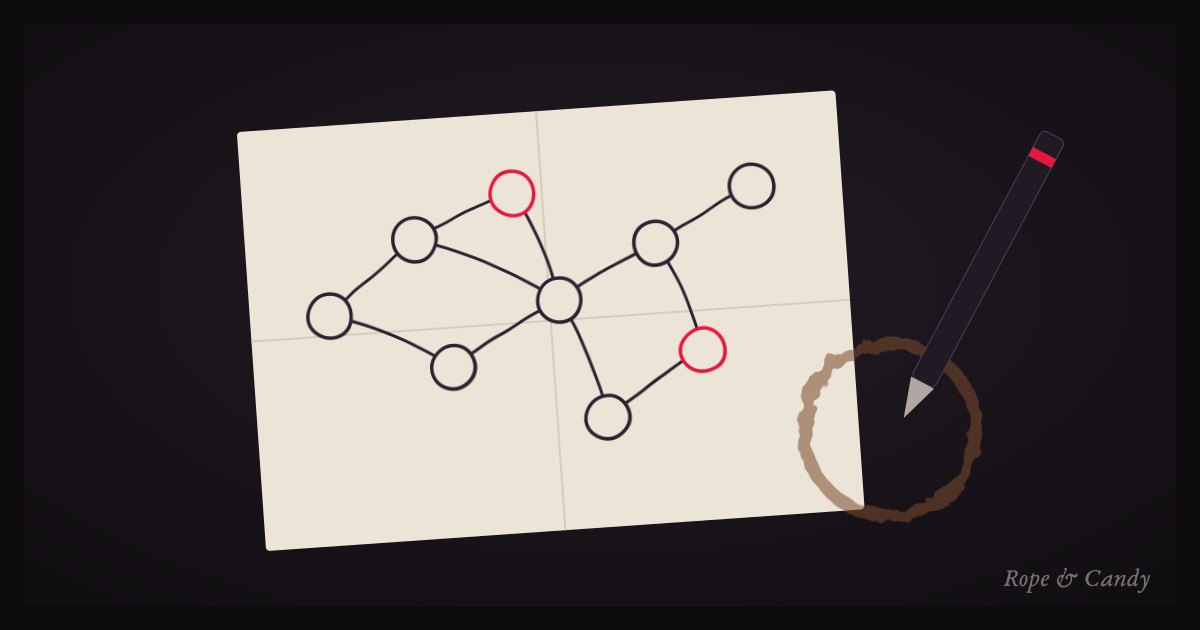
A polycule is the whole network of people connected through polyamorous relationships: you, your partners, their partners, and outward from there. The word blends "polyamory" and "molecule", because drawn on paper the group looks like a chemistry diagram, with people as atoms and relationships as the bonds. You do not date everyone in your polycule. You are in it because you are linked to someone who is.
It is pronounced POL-ee-kyool. Below you will find the common shapes, the difference between a polycule and a throuple, how polycules actually stay friendly, a napkin exercise for drawing your own, and what happens when a link breaks.
What is a polycule, in plain terms?
Think of a family tree, but for relationships instead of blood. If the word "poly" is new to you, start with our guide to what polyamory means, then come back.
An illustrative example. Sara is married to Luke. Sara also dates Ines. Ines lives with her partner Omar, and Omar sees Claire, who lives in another city. Sara, Luke, Ines, Omar and Claire form one polycule, even though Luke and Claire have never met and may never meet.
Two terms help here. Your partner's other partner is your metamour, so Luke and Ines are metamours. The person who connects two partners who are not together is the hinge, so Sara is the hinge between Luke and Ines.
People use the word in two ways. Some mean the full network, out to the far edges. Others say "my polycule" and mean the handful of people they actually see, eat with and text. Both uses are fine. Online, the word also gets borrowed as a joke for any friend group where several people have dated each other.
Polycule meaning: the common shapes
No two polycules look alike, but a few shapes come up again and again.
Vee
One person with two partners who are not involved with each other. Drawn out it looks like a V, with the hinge at the point. It is a common starting shape.
Triad
Three people who are all in a relationship with each other. Drawn out, a triangle. A triad is often called a throuple.
Quad
Four people linked together. Sometimes it is two couples who date across, sometimes all four are involved with each other. The word covers several layouts.
N and chain
An N is four people in a line with a crossbar: two couples where one partner from each couple is dating. Keep adding links in a row and you get a chain, where people at one end may barely know the names of people at the other.
Web
The big network: several hubs, cross-links, long-distance partners, a few loops. Polycules that last a few years can grow into this, and it is where the napkin drawing gets crowded.
Polycule vs throuple
This is the most common mix-up. A throuple is three people who are all together. A polycule is the network, whatever its shape and size.
Every throuple is a small polycule, or part of a bigger one if anyone in it has other partners. But a polycule does not have to be a throuple. A vee, for example, is not a throuple, because the two outer partners are not together. They might be close friends, or they might simply nod at each other at birthday dinners.
Some polycules are closed, meaning everyone agrees not to add new partners for now. That is often called polyfidelity. Others stay open and change shape over time.
How a polycule works day to day
Less like a soap opera, more like a well-run shared house. Healthy polycules tend to lean on a few ordinary tools:
- A group chat, for logistics and for the small stuff, like a photo of someone's new kitten.
- A shared calendar, so nobody books the same Saturday twice. It sounds clinical. It saves a great deal of hurt.
- A dinner now and then, where metamours get to be people to each other rather than names in a story.
- Shared health habits. Regular testing, condoms and barriers, telling the people it affects when results come back, and a sexual health clinic when anyone has questions. In a network, one person's choices reach several people.
How close everyone gets varies. In a "kitchen table" polycule, people could happily share breakfast. In a "parallel" one, everyone knows about each other but keeps their lives mostly separate. Neither is the right way. Pushing people into closeness they did not choose usually backfires.
Polycules often grow out of friendships and dinners, not apps. Someone meets a friend of a friend, there is a second dinner, then a third, and a year later there is a group chat with eleven people in it. The healthiest ones end up feeling less like a diagram and more like a circle of friends.
A first meeting with a metamour does not need a speech. Something like: "I'm really glad to finally meet you. Ines talks about you all the time." Then ask them something about their life that has nothing to do with the shared partner. Nerves are normal, and our guide for newcomers has more on walking into a room of new people.
In our own circle, a first meeting is almost always a coffee or a dinner, and it stays that easy: you find out whether you like each other before anything else.
Couples and single women who travel often keep friends in more than one city, and polycules stretch the same way. Claire, in our example, may see Omar once a month and still be an easy, welcome part of the group when she visits.
How to draw your polycule
Drawing it is a surprisingly useful exercise, and you only need a napkin and a pen.
- Put yourself in the middle. A circle with your name.
- Add your partners. A line to each one.
- Add their partners. And theirs, as far as you know.
- Use different lines. Solid for committed relationships, dotted for casual ones, a wavy line for long distance.
- Mark who has met whom. A small dot works.
- Mark the shared practical things. Who lives together, who shares money or children.
- Look at it together and ask. Is one hinge carrying too much? Who has never met? Where would a breakup hurt the most people?
Drawing it together can show the strain before it turns into a row. A hinge with four lines and a full-time job is a hinge who needs a quiet weekend.
What is cowboying in polyamory?
Cowboying, or cowgirling, means dating a polyamorous person while secretly hoping to pull them out of their polycule and into monogamy. You hear it in lines like "you'd be so much happier with just me" or slow pressure to drop a long-standing partner.
If you want monogamy, that is a perfectly good thing to want. Say so early, and date someone who wants it too. If you suspect you are being cowboyed, name it kindly: "I'm getting the feeling you'd like me to end things with Luke. That isn't on the table. Can we talk about what you actually want?"
Can polycules get married?
Not as a group. In the US, Canada, the UK and the EU, only two people can marry each other, and marrying a second spouse while married is bigamy. Living together as a polycule is not illegal. Somerville and Cambridge in Massachusetts recognised multi-partner domestic partnerships in 2020 and 2021, a small but real step. Some polycules hold commitment ceremonies with no legal weight, and some speak to a lawyer about wills and property. This is general information, not legal advice.
When a link in the polycule breaks
Breakups in a polycule rarely stay between two people. When Sara and Ines split, Luke loses a metamour he liked, and Omar may lose a friend. A few things help:
- The hinge talks to each person directly. No messages passed along.
- Nobody is asked to pick a side. Friendships between metamours can survive a breakup if people are allowed to keep them.
- Give the group chat some space. A quiet week beats a public post-mortem.
- Look at the drawing again. The shape has changed, and so have the practical things.
Common mistakes
- Expecting everyone to be best friends.
- Letting the hinge go quiet, so metamours hear news third-hand.
- Growing too fast because the early months feel wonderful.
- Treating a single woman who joins as an add-on to a couple. She is a partner in her own right, a point we make in our piece on why single women come on their own terms.
- Forgetting that nobody in the network signed up for drama they did not create.
Where polycules really begin
On paper a polycule is lines and circles. In life it is people at a table who like each other. Whether you call yourselves poly, open, swingers or simply curious, it is easier to build that with friends you can be honest with than with strangers on a screen, and we believe open sexuality between willing adults is nothing to hide. If you would like to meet people who get it, you can join Rope & Candy. It is free and takes one email, and when someone from our team is in your city, we meet you for a coffee or a dinner.
Questions people ask
What is a polycule vs throuple?
A throuple is three people who are all in a relationship with each other. A polycule is the whole network of connected partners, which might be a single throuple, a throuple plus their other partners, or a long chain of people who have never all met.
What is a polycule relationship?
It means being part of a group of people linked by romantic or sexual relationships, where everyone knows the others exist. You only date your own partners, not the whole group, but what you do affects everyone in it.
What is cowboying in polyamory?
Cowboying, or cowgirling, is dating a polyamorous person in the hope of pulling them away from their other partners and into a monogamous relationship. It is frowned on because it ignores what that person said they wanted from the start.
Can polycules get married?
Not as a group. In the US, Canada, the UK and the EU a marriage is between two people, and marrying a second spouse is bigamy. Somerville and Cambridge in Massachusetts recognised multi-partner domestic partnerships in 2020 and 2021. This is general information, not legal advice.
How do you pronounce polycule?
POL-ee-kyool. The ending sounds like the end of molecule, which is where the word comes from.