
Consent Culture: What It Looks Like at Parties and in Life
Consent culture is a way of living and socialising where asking before you act is normal, a no is accepted without sulking or pressure, and a yes is something you look for rather than assume. It applies to sex, but it starts much earlier: asking before a hug, before posting someone's photo, before telling a friend's story. The aim is a space where everyone can speak up for themselves, and nobody has to fight to be heard.
That sounds obvious. In practice, plenty of places run on the opposite habit, where people go ahead unless someone objects loudly enough. This guide covers what consent culture looks like day to day, at parties, with safe words and inside long relationships.
What consent culture means in everyday life
The simplest test is this: in a consent culture, saying no costs you nothing. Nobody rolls their eyes, nobody asks you to explain, nobody tries again in five minutes.
Most of it is small:
- asking "Hug or handshake?" when you meet someone new,
- checking before you tag a friend in a photo,
- taking "I'm not sure" as a no for now, not a puzzle to solve,
- telling a partner's story only if they are happy for you to tell it,
- letting someone leave a conversation or a party without making them feel bad.
None of this is fussy. It simply moves the weight from "speak up if you mind" to "I'll check you're happy." People who grow up with that habit find it easy. People who did not can learn it at any age.
What consent is not
It is not a form you sign once. It is not a yes from someone who feels they cannot say no because of who is asking. And it is not silence. A good deal of criticism of consent culture points at exactly this: people can say yes on the outside while feeling pushed on the inside. A real consent culture watches for pressure as much as for the words.
What are the 4Cs of consent?
There are several short checklists, and they agree on the core. One common version is the 4Cs:
- Clear. No guessing. If you are unsure what an answer means, ask again.
- Coherent. The person is able to decide. Someone very drunk or half asleep cannot give a real yes.
- Willing. Freely given, without pressure, guilt or a sense of owing someone.
- Ongoing. It can change at any point, and it applies to each new thing, not the whole night.
Another popular version, often written as FRIES, adds that consent should be informed (people know what they are agreeing to) and specific (yes to one thing is not yes to everything). Whichever list you prefer, the spirit is the same: a real yes is free, aware and still open to change.
Enthusiastic consent, and why it does not have to be loud
Enthusiastic consent asks you to look for a clear, wholehearted yes rather than settling for the lack of a no. It is a good rule, and it has done a lot to shift thinking away from "she didn't stop me."
It is sometimes misread as needing excitement on display. Quiet people, shy people and people who simply express things calmly can give a perfectly real yes without cheering. The point is not the volume. It is whether the person truly wants to, and whether you have checked rather than assumed. If you cannot tell, ask.
Consent at parties
Social evenings with open-minded adults are where consent culture gets its most practical test. There is music, drink and chemistry, and people who have only just met. Good hosts and good guests make the rules feel easy rather than stiff.
Before you touch anyone, ask
Every touch beyond a friendly greeting needs a question first, and each new thing needs its own question. A hand on the arm is not permission for anything else.
Words that work:
- "Would you like to dance?"
- "Can I kiss you?"
- "Is this okay?"
- "Do you want to keep going, or take a break?"
Asking does not kill the mood. Most people find being asked feels caring, and a warm yes is far better than a hesitant silence.
Couples answer for themselves
When you meet a couple, ask each person, not just the one doing the talking. One partner cannot say yes on behalf of the other, and a couple's agreement between themselves does not replace a yes from the person in front of you.
Keep a clear head
A drink can help people relax. Several can blur the line between a real yes and a fuzzy one. Many people who enjoy these evenings drink little, or not at all, for exactly that reason.
Privacy is consent too
Photos, names and stories all belong to the people in them. In our own circle, the house rules fit on one line: consent first, no means no, maybe means no, and no phones or cameras. New guests often tell us the last part relaxes them as much as the first.
For a fuller picture of how such an evening runs, see our guide to what happens at a play party.
How to say no at a party
Many people worry more about saying no than about hearing it. They do not want to seem rude, or hurt someone they like. A short, friendly no is a kindness, because it saves everyone from guessing.
Some ready phrases:
- "No thanks, but I've enjoyed talking with you."
- "Not tonight."
- "I'm happy just chatting."
- "I'd like to stop now."
You do not need a reason. You can change your mind halfway through something you agreed to. And you can leave at any point.
Hearing a no
If someone says no to you, say "Of course" and mean it. Do not ask why, do not try again later in the evening, and do not complain to their friends. The way people handle a no tells everyone in the room whether they are safe company.
Safe words and signals
A safe word is a word agreed in advance that means stop, at once, no discussion. It is common in kink, where play can involve a lot of pretend resistance, but plenty of couples use one anywhere.
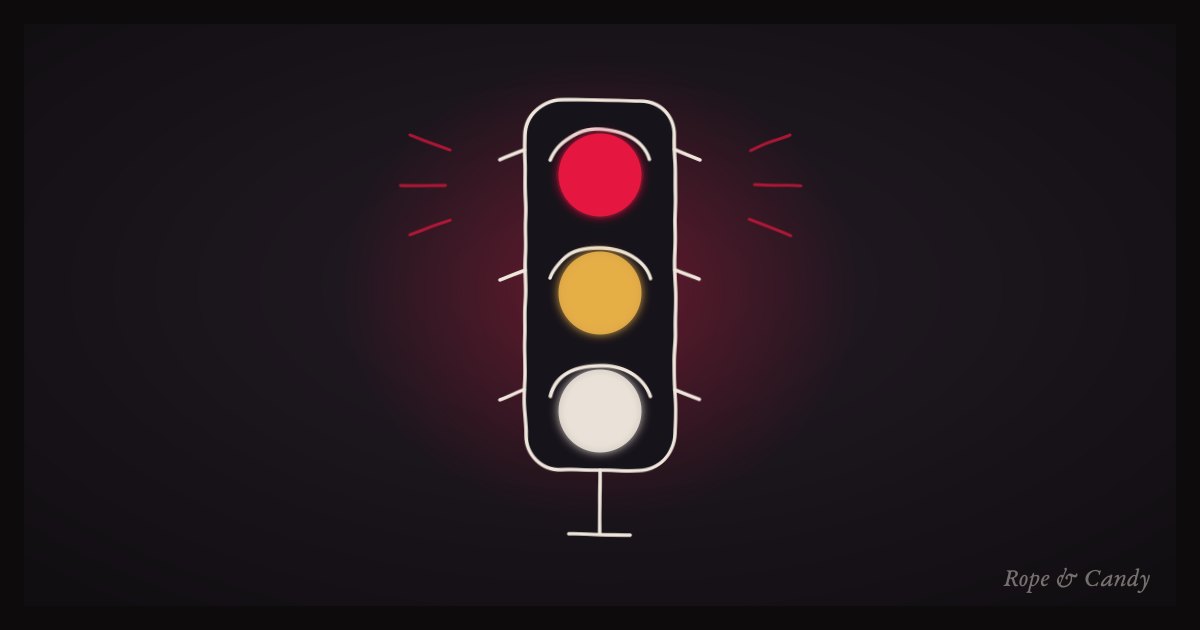
The traffic light system is the easiest to remember:
- Red: stop completely.
- Yellow: slow down, or check in with me.
- Green: all good, carry on.
Couples going out together often add a private signal too: a squeeze of the hand, a touch of the ear, a phrase like "Shall we get some water?" Agree in advance what it means, whether that is "check on me" or "we're going home," and treat it with no questions on the night. You can talk about it in the morning.
When someone crosses a line
Even in good company, mistakes happen and, more rarely, people ignore a no. If it happens:
- Say stop clearly and move away if you can.
- Tell the host or a trusted friend straight away. A good host wants to know.
- Look after yourself first. Leave if you want to, and get support.
- Talk it through later with someone you trust, or a counsellor if it stays with you.
If you are the one who made the mistake, apologise plainly, do not argue, and learn from it. A community where people can own their errors is safer than one where everyone pretends to be perfect.
Consent culture in relationships
A long relationship does not switch consent off. Being married or together for years means you know each other well, not that every yes is guaranteed. Partners still get tired, change their minds, or need a night off.
At home, consent culture looks like checking in during intimacy, asking before trying something new, and making it easy to say "not tonight" without hurt feelings. It also means talking about fantasies without pressure to act on them. Our guide to what sex positive means goes further into that kind of open conversation, and our page on swinger etiquette covers the manners of couples who explore with others.
Where consent is simply normal
The real sign of a consent culture is that nobody has to think about it much. Asking feels natural, no is easy, and people look after each other without a speech. It is easiest to find that in small evenings among friends, where everyone already knows the rules, rather than in a crowded room full of strangers. If you would like to spend time with people who live this way, you can join Rope & Candy for free with one email. When someone from our team is in your city, we meet you for a coffee or a dinner, and anything after that is your call.
Questions people ask
What are the 4Cs of consent?
Versions differ, but a common one is clear, coherent, willing and ongoing. Clear means there is no doubt about the answer, coherent means the person is in a state to decide, willing means free of pressure, and ongoing means it can be checked and changed at any point.
What is consent in intimacy?
It is a freely given agreement between adults about what they will do together, given by people who are able to decide and who know they can change their minds. It covers each act, not a whole evening or a whole relationship.
Which is an example of consent?
Asking 'Can I kiss you?' and hearing a relaxed 'Yes, I'd like that' is consent. Silence, a shrug, a yes given under pressure, or a yes from someone too drunk to decide is not.
What is enthusiastic consent?
The idea that you look for a real, wholehearted yes rather than the absence of a no. It does not have to be loud. A calm, warm yes counts. What matters is that the person clearly wants to.
What is a safe word?
A word agreed in advance that means stop, straight away, no questions. Many people use the traffic light system: red for stop, yellow for slow down or check in, green for all good.